Orienteering for children: how families can start and what to expect
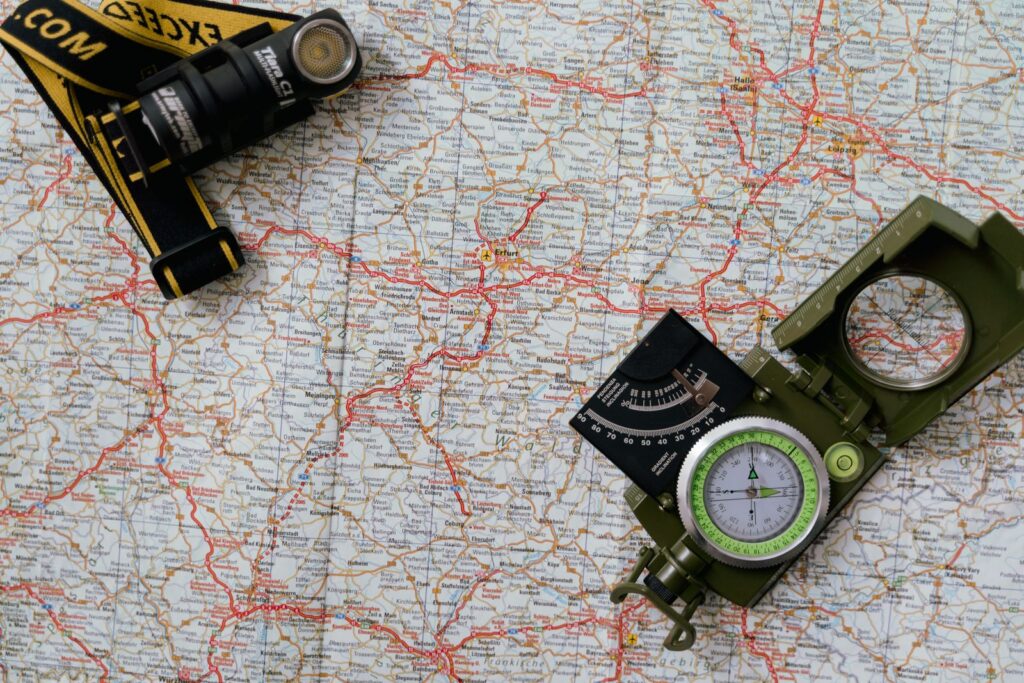
Orienteering is a navigation sport where children follow a special map between checkpoints, choosing their own route. It needs no special kit to try, works at walking pace, and genuinely suits all ages, from toddlers in carriers to teenagers racing the clock. Here is how families can get started, what the course colours mean, and what to expect at a first event.
In short:
- Orienteering is navigating between checkpoints (called controls) marked on a special map. There is no set route, so children decide which way to go.
- White, Yellow and Orange courses are designed for complete beginners: usually up to 2.5km, with controls on paths or visible from them.
- You can try it three ways: a local club event, a family-friendly Xplorer event, or one of over 500 Permanent and Virtual courses you can walk or run anytime.
- All you need is trainers and weather-appropriate clothes. At events you can hire or borrow the timing device and a compass.
- In woodland, full leg cover is compulsory; shorts are allowed at most urban events.
What orienteering actually is
According to British Orienteering’s newcomers’ guide, orienteering is an outdoor adventure sport that exercises mind and body. The aim is to navigate between controls marked on a special orienteering map, and because there is no set route, the skill and the fun come from choosing the best way to go. In competitive orienteering the challenge is to complete the course in the quickest time, but beginners can walk or jog at their own pace.
Courses take place almost anywhere: forests, parks, moorland, town centres, school playgrounds and university campuses. British Orienteering’s family page stresses the sport suits all ages and fitness levels, whether you are still venturing out with a pram or have children ready to race between the control markers.
Three easy ways to try it
A local club event. Clubs welcome newcomers and run beginner-friendly events, and many offer training sessions for juniors. British Orienteering suggests contacting your local club as the best way to get a feel for the sport.
An Xplorer event. Xplorer is British Orienteering’s family-friendly navigation challenge: children explore a park to find the markers, building orienteering skills in a playful way, with fun facts along the route. It is designed for the whole family, whatever their ages.
A permanent or virtual course, anytime. There are over 500 Permanent and Virtual Orienteering courses across the country, listed on British Orienteering’s sister site Go Orienteering. Download a map, or use the MapRun app on your phone, and complete the course in your own time.
Course colours explained
Courses are graded by colour for technical and physical difficulty. White, Yellow and Orange are designed for complete beginners: they are usually short, up to 2.5km, with orange-and-white flag controls on paths or visible from the path. Green, Blue, Brown and Black courses get progressively longer and harder, and British Orienteering recommends them only once you have some experience. Some events use a “score” format instead, where you choose which controls to visit within a time limit, which also suits beginners.
What to wear and bring
The British Orienteering getting-started page for families keeps it simple: a comfortable pair of trainers (or wellies if it is muddy) and clothes for the weather, with a rain jacket for longer courses. For a first woodland event, full leg cover is compulsory, and shorts are allowed at most urban events. You do not need to buy a compass or timing equipment: at events you can hire or borrow the timing device that records your race, and a compass.
Common questions
What age can children start orienteering?
Any age. British Orienteering says families take part with babies in carriers, toddlers taking first steps, and grandparents joining in, and there are accessible-friendly courses too. Children ready to navigate independently can move onto beginner courses of their own.
Does my child need to read a map first?
No. Beginner courses keep controls on or near paths, Xplorer events are built to teach the skills as you go, and clubs are used to helping first-timers.
Do we have to run?
No. Walking a course is normal for beginners, and many families treat it as a walk with a purpose. The competitive element only matters if and when your child wants it.
New to the sport? Browse our orienteering guides for parents. For other outdoor days out, see our school sports day guide and our tips for wet-weather planning for outdoor sport.