Wet-weather football: plan for playing and waiting.
- Check the club update before you leave. Bad weather doesn’t automatically cancel a match, and a scheduled fixture doesn’t prove the pitch is open.
- Agree the playing layers with the coach. A coat for waiting isn’t the same as clothing approved for play.
- Pack dry kit separately and keep a warm layer within easy reach for the touchline.
- If thunder and lightning arrive, play should stop and everyone should shelter. The people running the match decide, and safety comes first.
Wet-weather football takes two plans: one for playing and one for waiting. Check the club’s latest update for pitch and fixture changes, agree what your child may wear to play, pack a separate dry set and bring warm, waterproof clothing for yourself. Good packing can’t make an unsafe pitch safe.
Check before you leave
Read the latest club update for pitch changes, cancellations and arrival instructions. Bad weather doesn’t automatically cancel a match, and a scheduled fixture doesn’t prove the pitch is open. The club and officials make the playing decision.
Check the forecast yourself too. England Football’s grassroots thunderstorm guidance says it’s the responsibility of all participants to check forecasts regularly before a match or training, and points to the latest Met Office guidance for judging whether weather is unsafe.
Who decides, and when
England Football’s guidance is clear on who makes the call. For a match, the match official decides whether a fixture is postponed, cancelled or abandoned because of a thunderstorm, where possible in consultation with both teams and before kick-off. For training, the person running the session, such as the manager or coach, decides.
Where the weather is likely to make an event unsafe, for example through thunder and lightning or extreme winds and rain, the activity should be postponed or cancelled. If it turns unsafe after a session has started, it should be stopped and everyone should shelter, in a safe indoor location for instance, until it’s safe. Conditions on the way out count too. If a match restarts, the official should check the pitch is still safe, because debris or rain may make it unplayable.
As a parent, you’re not there to overrule the coach or the referee. You’re there to ask early, check the updates, and take your child out of the weather if you’re worried about their safety. If someone is hit by lightning, the guidance says to call 999 and, once it’s safe to approach, start first aid.
Agree the playing layers
Ask the coach what your child may wear. The FA’s Mini-Soccer handbook says players should wear appropriate clothing in poor weather, but hoodies aren’t allowed. Match-kit and underlayer rules can apply too.
A coat for arrival or breaks is different from clothing approved for play. Don’t assume a hooded top, scarf or loose item belongs on the pitch because it’s warm. Choose accepted layers your child can move in comfortably. Cold hands are a common problem, so ask whether gloves are allowed for your child’s age group.
Keep the spare kit dry
Pack dry socks, clothes and ordinary shoes in a separate bag, with a towel and a bag for wet things. Keep an outer layer within easy reach while your child waits or comes off the pitch. Tell the coach if your child is uncomfortable or needs help. Discomfort isn’t a character-building exercise.
Waiting between games
Tournament days are where wet weather hurts most, because the waiting is longer than the playing. Bring a dry top and socks for between games, a waterproof coat and hat, something warm to drink, and a towel to sit on or dry off with. Know where children can shelter between games.

Parents need a plan
Wear suitable outerwear and shoes. Check whether seats or umbrellas are allowed, stay in the spectator area and keep routes clear. Protect your keys and a charged phone from the rain, and confirm collection arrangements if another adult is taking your child home.
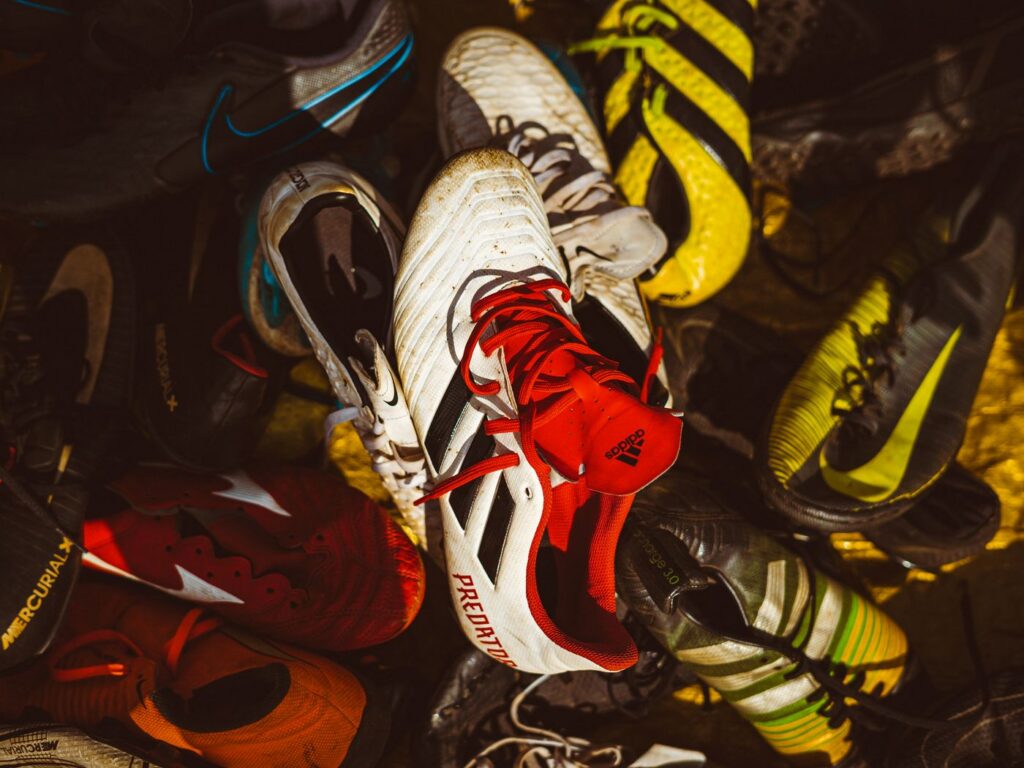
Don’t try to solve rain with the wrong sole, either. Surface and venue rules still matter, so check before switching boots. Muddy weather isn’t permission to use metal studs on an artificial pitch. Our guide to FG, AG and turf boots explains the sole labels.
Where parents slip up
The common mistakes are setting off without checking the club update, sending your child out in a coat the coach doesn’t allow, packing one bag so the wet kit soaks the dry kit, and forgetting a layer for the journey home. Worst is ignoring thunder and hoping it passes. Decisions rest with the officials and the coach, so ask them.
At home
Unpack wet kit, wash the bottle, and clean and air-dry the boots according to the maker’s instructions. The rain gets one session. It doesn’t need to live in the bag all week.
Keep reading
- The match-day bag
- How to clean football boots
- Be the touchline parent your child wants there
- All football guides
Sources
- https://www.englandfootball.com/articles/2024/Feb/27/Thunderstorm-guidance
- https://www.thefa.com/-/media/cfa/westridingfa/files/clubs/mini-soccer-handbook-2025.ashx
- https://www.thefa.com/football-rules-governance/lawsandrules/laws/football-11-11/law-4—the-players-equipment
- https://www.thefa.com/-/media/cfa/durhamfa/files/facility-and-football-pitch-development/3g-pitch-info/3g-football-turf-guidance-for-players.ashx?la=en
- https://www.nike.com/gb/a/how-to-clean-soccer-cleats