Bikeability explained for parents: levels, what happens and how to book
If your child’s school has mentioned Bikeability, you might be wondering what it involves. Bikeability is the government’s national cycle training programme for children in England, delivered in schools by qualified instructors. It builds road skills across three levels, from bike control on the playground to riding confidently on busier roads.
In short:
- England’s national cycle training programme, administered by The Bikeability Trust for the Department for Transport
- Level 1 covers playground basics (Years 3-4), Level 2 moves onto quiet roads (Years 5-6) and Level 3 tackles busier roads (from around 11)
- Over five million children trained since 2007
- Most primary schools in England offer it; ask your child’s school when the next course runs
- Your child needs a roadworthy bike and a properly fitted helmet
What is Bikeability?
Active Travel England describes Bikeability as the government’s flagship national cycle training programme for children in England. Based on the National Standard for Cycle Training, it embeds four core functions into every rider’s behaviour, according to Cycling UK: observation, positioning, communication and priorities. It is not about passing a test; it is about the habits children need to ride safely and confidently on real roads.
Training is delivered by qualified instructors through local providers, with funding distributed by The Bikeability Trust (in Greater London, Transport for London). Scotland runs its own version, Bikeability Scotland, and the programme is not currently available in Wales.
The three levels explained
Level 1 takes place off-road, normally on the school playground. Most children take part in Year 3 or 4, aged 7 to 9, and need to ride without stabilisers first. They learn to control their bike: setting off, braking and stopping, pedalling one handed, looking behind and steering around obstacles. Basic maintenance and helmet checks are included too.
Level 2 is the step onto real roads, often the biggest leap for parents as well as children. Instructors lead small groups onto quiet local streets, usually in Year 5 or 6 (ages 9 to 11). Children learn to start and finish an on-road journey safely, pass parked vehicles, read signs and road markings, and handle quiet junctions, crossroads and single-lane roundabouts.
Level 3 is for children from around 11 who have completed the earlier levels. Taught in smaller groups or one-to-one, it covers busier situations: multi-lane roads, junctions with traffic lights, roads above 30mph and filtering past queuing traffic. It prepares a child to cycle to secondary school independently.
What your child needs on the day
Bikeability asks that every bike is roadworthy before the course, and suggests a quick “ABCD” check: Air in the tyres, working Brakes front and back, an oiled Chain, and Direction, meaning handlebars and saddle fixed tight. If that sounds daunting, a local bike shop can give the bike a once over.
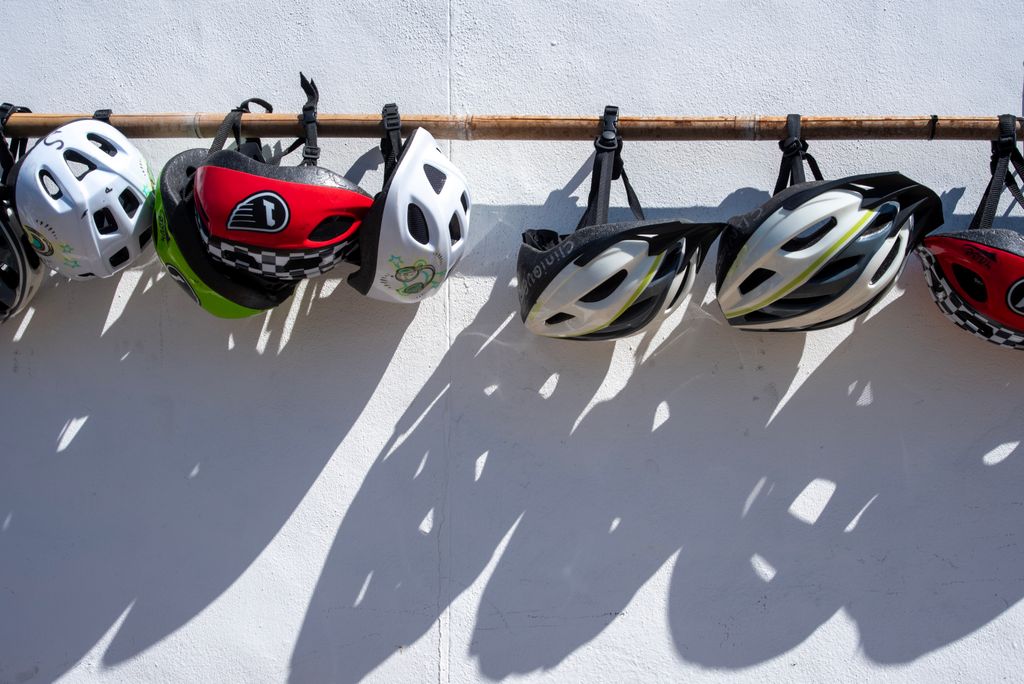
A helmet is recommended. It should sit level, the peak about two fingers’ width above the eyebrows, straps forming a V below the ears and room for two fingers under the chin strap. Children usually wear school uniform; avoid loose clothing that could catch in the chain, and pack a water bottle and extra layer.
Does it make a difference?
A 2019 independent evaluation of the programme, cited by Cycling UK, found that after training children were more likely to cycle (65% compared with 56% before) and more likely to cycle on the road (34%, up from 22%). Parents were also more willing to let their children ride on roads afterwards (70%, up from 58%).
How to book a place
Most primary schools in England already offer Bikeability, so ask your child’s school which year group takes part and when the next course runs. You can also search for local courses on the Bikeability website, or ask your local council. If your child is still finding their feet, start with our guide on how to teach a child to ride a bike; our piece on what age children can start cycling covers readiness, cycling kit for children covers helmets and gear, and how to find a cycling club helps when they catch the bug. All our cycling guides sit in the cycling section.
Common questions
Is Bikeability free? The programme is government funded and most school courses are offered at no cost to families, though arrangements vary locally, so check with your school or local provider.
What age is Bikeability for? Level 1 is usually Years 3 and 4 (ages 7 to 9), Level 2 Years 5 and 6 (ages 9 to 11) and Level 3 from around 11.
What if my child is nervous about riding on the road? That is what the levels are for. Children only move onto quiet roads at Level 2 once they can control their bike confidently off-road, and instructors keep groups small so nobody is rushed.