Basketball rules and positions explained for parents
- Two teams of five play, with up to seven substitutes rolling in and out.
- Shots inside the arc score two points, beyond it three; free throws are worth one.
- Games run in four quarters, usually 10 minutes each, with overtime if tied.
- Guards handle the ball, forwards and centres work near the basket, wings do a bit of everything.
You do not need a rulebook to enjoy your child’s basketball, but a working grasp of the basics makes Saturday mornings far more fun. Here is the parent version, based on Basketball England’s own guide to the 5v5 game.
The shape of a game
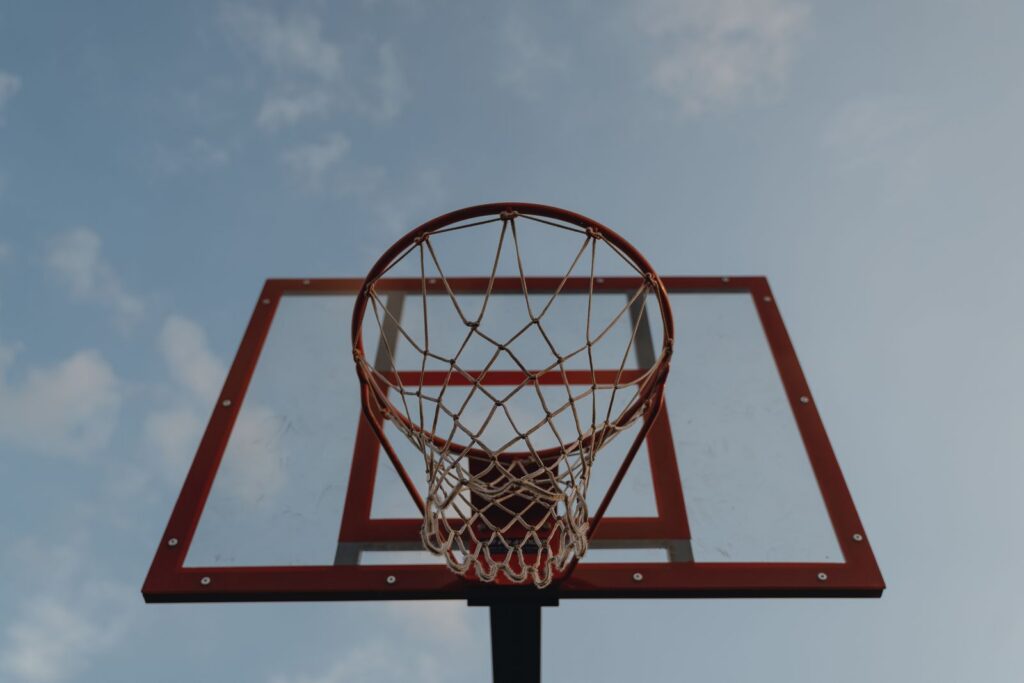
Two teams of five players share the court, with up to seven substitutes able to come in and out as needed. The hoop sits 10 feet (3.048 metres) above the floor, the same height from primary school gyms to the professional game. Teams score by shooting the ball through the opponents’ hoop, and games are typically split into four equal quarters, usually 10 minutes each. If the scores are level at the end, a five-minute overtime period settles it.
Scoring: two, three or one
A wide arc surrounds each basket. Shots scored from inside the arc are worth two points, and anything dropped from beyond it is worth three. Free throws, awarded after certain fouls, are taken unopposed from the free throw line and count for one point each. When your child’s team groans at a long-range attempt, this is why: the extra point tempts players into lower-percentage shots.
Moving with the ball
Players can move freely around the court, but must dribble (bounce the ball while moving) whenever they have it. Pick the ball up and you must pass or shoot; run with it tucked under your arm and the whistle goes. Passing to team-mates is the other way to move the ball, and good junior teams pass far more than they dribble.
What happens on defence
Without the ball, players try to intercept passes, steal the ball or block shots, all without fouling. Either team can grab rebounds, the missed shots that bounce off the rim or backboard, so a missed shot is not the end of an attack. Youth referees whistle physical contact quickly, which keeps the game safe while children learn where the line sits.
The positions, roughly
Modern basketball is fluid and players often cover several roles, but the classic map helps. Guards are the smaller, quicker players who handle the ball and start attacks. Taller players typically operate as forwards or centres near the basket, rebounding and finishing close-range shots. Wing players are the versatile ones, switching between guard and forward work. In junior basketball, expect coaches to rotate children through every role rather than pigeonholing them early.
What this means on the sideline
Cheer effort and passing, not just scoring: a child who sets up a teammate did the harder job. Junior games can look chaotic because everyone is learning the dribble rule at once, so travelling calls come thick and fast. If you want the full competition picture, our leagues guide maps where matches fit, and the first session guide covers what training looks like.
Common questions
How long is a junior game? Formats vary by league and age, but the senior structure is four 10-minute quarters, and junior versions are usually shorter.
Why does the whistle go so much? Beginners travel, double-dribble and foul constantly. The whistle is the teaching tool, not a sign of a bad game.
Where can I read more? The sources below are Basketball England’s own pages. More guides sit in the basketball section.