Your child’s first fencing lesson: what to wear and ask
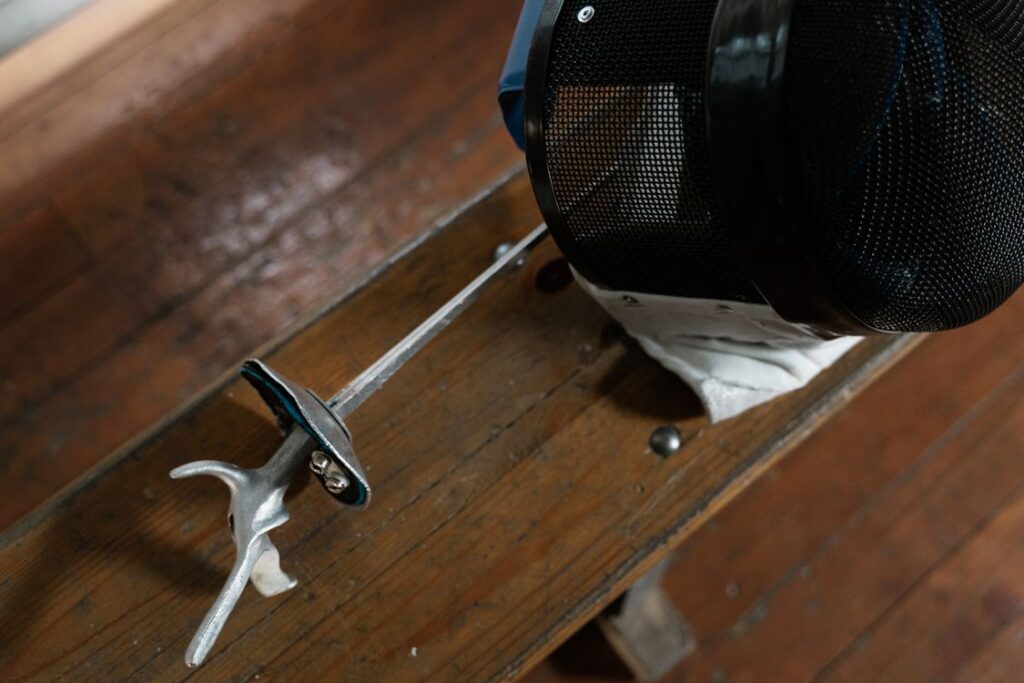
For a child’s first fencing session, ask the club what to wear and what it supplies before buying any kit. British Fencing recommends long tracksuit trousers, indoor trainers and a T-shirt for first sessions, with long sleeves for plastic-kit fencing. The coach must also arrange protective equipment appropriate to the activity: ordinary sportswear is not a substitute for fencing protection.
- Check whether the session uses plastic, foam or metal weapons.
- Confirm that loan equipment is available in your child’s size.
- Follow the club’s clothing instructions, not a competition shopping list.
- Ask about the next step before buying a mask, blade or jacket.
What to ask before the first visit
Tell the organiser your child’s age and that they are a complete beginner. Ask which class is suitable, whether parents stay, how booking works and whether the price includes loan equipment. These are questions for the individual club, rather than promises that every beginner course works the same way.
British Fencing’s Fencing 101 says most clubs lend equipment to newcomers. That is a useful reason to contact the club before spending, but it does not guarantee every size will be available on every evening. If you are still deciding when to start, read our guide to starting fencing at different ages.
Clothing depends on the activity
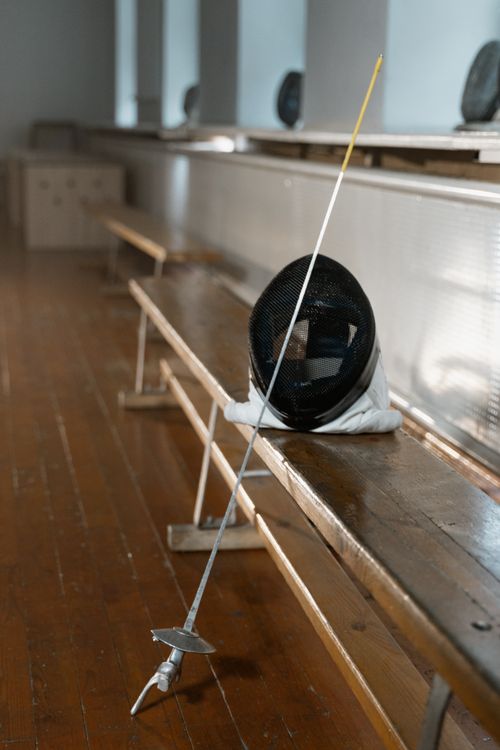
Plastic and foam fencing have their own equipment requirements. British Fencing’s Equipment by Activity guidance, updated 2 October 2026, lists a sleeved top, legs covered at least to knee level and a purpose-designed plastic face mask or regulation fencing mask. Do not interpret a plastic weapon as permission to leave the face unprotected.
Metal-blade beginner classes need different protection. The same guidance lists a fencing jacket, plastron, mask and glove, alongside suitable leg protection, socks and indoor trainers. A plastron is the protective layer worn under the jacket. Let the coach check fit and explain how each item is worn; ask before joining in if anything is missing or feels insecure.
Why tracksuit advice can sound contradictory
Tracksuit trousers can be allowed for coach-supervised beginner classes following a risk assessment. That does not make them acceptable for every later fencing activity. British Fencing’s July 2026 safety update explains that breeches are now required for under-14 club sparring with size 2 or 3 electric blades, while certain supervised beginner activities retain the tracksuit option.
The distinction matters when a child moves from a taster course into ordinary club sparring. Ask the coach what changes at that point, rather than assuming the first-session clothing advice still applies. British Fencing explicitly says sparring in shorts is unacceptable. For beginner epee sparring, legs cannot be targets unless the pupils wear the specified breeches and long socks.
Keep the first visit simple
Our suggestion is to treat the first session as a chance to see whether your child enjoys the activity and feels comfortable asking the coach questions. There is no need to turn it into a kit-buying trip. Before leaving, ask what the next session involves, whether borrowing can continue and which purchases, if any, the coach recommends first. Browse our fencing section as the new routine takes shape.
Common questions
Do we need to buy a sword first?
Usually not: British Fencing says most clubs lend beginners equipment. Confirm the arrangements with your chosen club before booking or buying.
Can my child wear shorts?
Do not pack shorts as the default. Ask the club for its instructions; British Fencing rules out shorts for sparring, even when supervised.
Are the rules the same for a taster and a competition?
No. Equipment requirements vary by activity. Check with the coach before moving into club sparring or entering an event.
Sources checked 11 November 2026: British Fencing, Fencing 101; Equipment by Activity; Updated BF Safety Guidelines 2026. Clothing and equipment decisions should be confirmed with the session provider.