Rugby ball sizes for children: size 3, 4 and 5 explained

Rugby balls come in three junior-relevant sizes, and the right one depends on your child’s age group. In England the RFU’s age grade rules set the ball for each band: size 3 for under-7s to under-9s, size 4 for under-10s to under-14s and girls’ under-15s, and the full-size 5 from under-15s upwards. Match the ball you buy to the group your child plays in this season.
- Under-7s, under-8s and under-9s: size 3.
- Under-10s to under-14s, and girls’ under-15s: size 4.
- Under-15s and older, up to senior rugby: size 5.
- The same sizes apply in training as in matches, so practise with the ball your child plays with.
- Clubs supply balls for sessions and matches; a correctly sized ball at home is for extra practice.
The sizes at a glance
The RFU’s Regulation 15, which governs age grade rugby for the 2026/27 season, sets the ball size inside each age band’s rules of play. The under-9 rules specify a size 3 ball and the under-13 rules a size 4. Net World Sports’ rugby ball size guide, which follows the RFU bands, lays out the full ladder:
- Size 3 – under-7s, under-8s and under-9s. The mini and early contact years.
- Size 4 – under-10s through to under-14s, and girls’ under-15s.
- Size 5 – from under-15s, the same full size used in adult rugby.
If you are unsure which age group your child is in this season, our guide to age grade rugby explains how the bands are set, and the rules guides for each age, such as under-9s and the introduction of the tackle and under-10 rugby rules, describe what the game looks like at that stage.
Why the right size matters
Ball size is a coaching decision, not a marketing one. Net World Sports’ guide notes that a ball that is too big makes handling and passing noticeably harder for children, and that the balls used in training should be the same as those used in matches. The smaller sizes exist so children can learn to catch, pass and kick with a ball their hands can control, then step up as they grow.

Which ball to buy
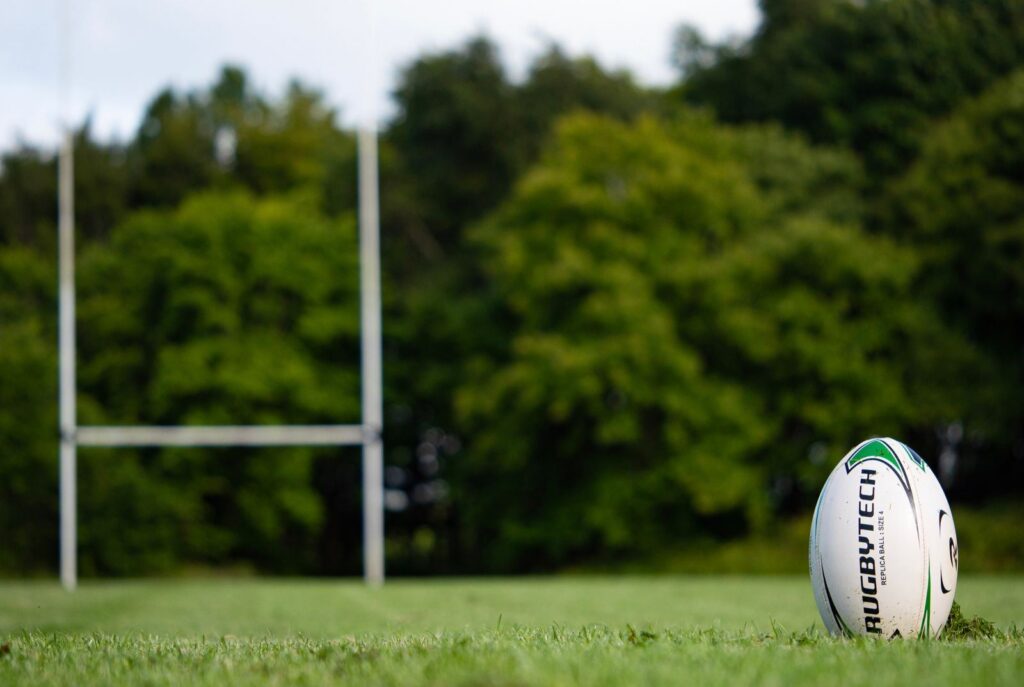
For most children a durable training ball in the correct size is enough; match balls cost more and are designed for games rather than daily use. Check the size printed on the ball before paying, since replica and training balls come in every size. The ball in our hero image is a size 4 replica, for example. Gilbert lists its current range on its rugby balls page, with the size marked on each model.
Common questions
What size rugby ball does an under-10 need? Size 4. The move from size 3 to size 4 happens between under-9s and under-10s.
When do children move up to a full-size ball? At under-15s, when players switch to the size 5 ball used in senior rugby. Girls’ under-15s stay on size 4 for one further season.
Does my child need their own ball? Not for sessions; clubs provide balls for training and matches. A cheap, correctly sized ball for the garden or park is useful if your child wants to practise passing and kicking between sessions.
Do the sizes differ for tag rugby? No. Tag formats at under-7s and under-8s use the same size 3 ball; the difference is the tag belt, not the ball. Our tag rugby rules guide covers the format.
There are more guides in our rugby section, including rugby kit and the mouthguard rules.
Sources
- RFU Regulation 15: Age Grade Rugby, 2026/27 season (with the under-9 and under-13 rules of play appendices)
- Hinckley RFC: minis playing laws and pitch sizes
- Net World Sports: rugby ball size guide
Affiliate link: if you buy through it, Touchline Parents may earn a commission at no extra cost to you. It does not change our advice. See our affiliate disclosure.