Squash kit for children: what parents actually need to buy
- Venues and beginner sessions lend rackets and balls, so the starting spend is nothing.
- Goggles are the one safety essential on court, and courses provide them.
- Children start on bouncier balls: Mini Red for roughly ages 5-7, Mini Orange for 7-10.
- The first real purchase is a light beginner racket, often under 130g.
Squash kit is refreshingly simple, and England Squash’s own advice is clear: you do not need expensive kit, specialist shoes or your own racket to have a go. Here is the honest list.
Stage one: borrow everything
For the first sessions, buy nothing. Beginner sessions and clubs provide rackets and balls, so ask the venue before you go and they will point you the right way. Your child needs comfortable sports clothes and clean trainers with non-marking soles, which most school PE trainers already are. Squash Stars courses for ages 5-9 include use of rackets, balls and goggles in the course price, as our costs guide explains.
Goggles: the one essential
Protective eyewear is the single non-negotiable. England Squash recommends it for everyone on court, and for children it should be automatic from the first knockabout: a squash ball moves fast at head height. Venues and courses lend goggles, so there is nothing to buy at first; when your child plays weekly, a pair of their own is a cheap and worthwhile purchase.
Balls: dots matter more than brands
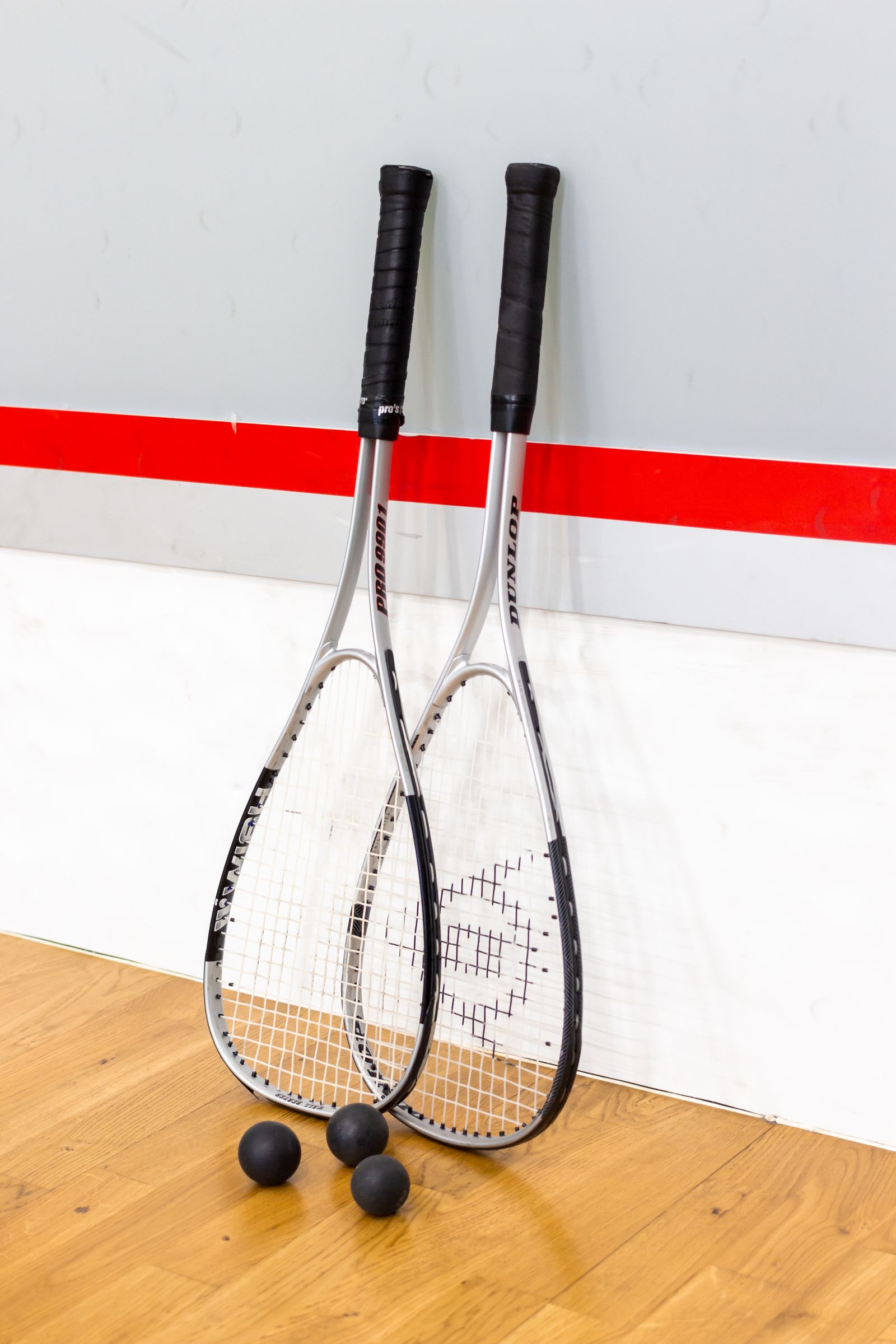
Squash balls are graded by bounce, shown by coloured dots, and the right ball keeps rallies alive. England Squash’s ball guide, built around official supplier Dunlop, is simple: children aged roughly 5-7 start on the Mini Red ball, ages 7-10 on the Mini Orange, and adult beginners on the bouncier blue dot Intro ball. Red dot Progress suits improvers, single yellow the club and league standard, and double yellow the advanced game. Cold courts flatten balls, so if rallies die, move to a bouncier dot rather than blaming the player.
Stage two: a first racket
Once the habit sticks, buy a simple beginner racket. England Squash’s advice is to skip the expensive models: choose one that feels comfortable, light enough to swing and easy to control, and many beginners prefer a lighter racket, often under 130g, with a secure grip. A sports-shop starter racket does the job for the first year or two.
What not to buy
Skip specialist squash shoes at the start; clean non-marking trainers are fine until footwork gets serious. Skip branded clothing, gadget grips and heavy advanced rackets too. The club finder guide shows how to choose a venue that lends equipment, which keeps the whole first year cheap.
Common questions
Does my child need their own ball? Not at first; sessions provide them. A tube of the right dot ball is a cheap extra once they practise between sessions.
Are squash shoes worth it later? Yes, once your child trains hard: court shoes grip and support sideways movement better than running trainers.
Where can I read more? The sources below are England Squash’s own pages. More guides sit in the squash section.